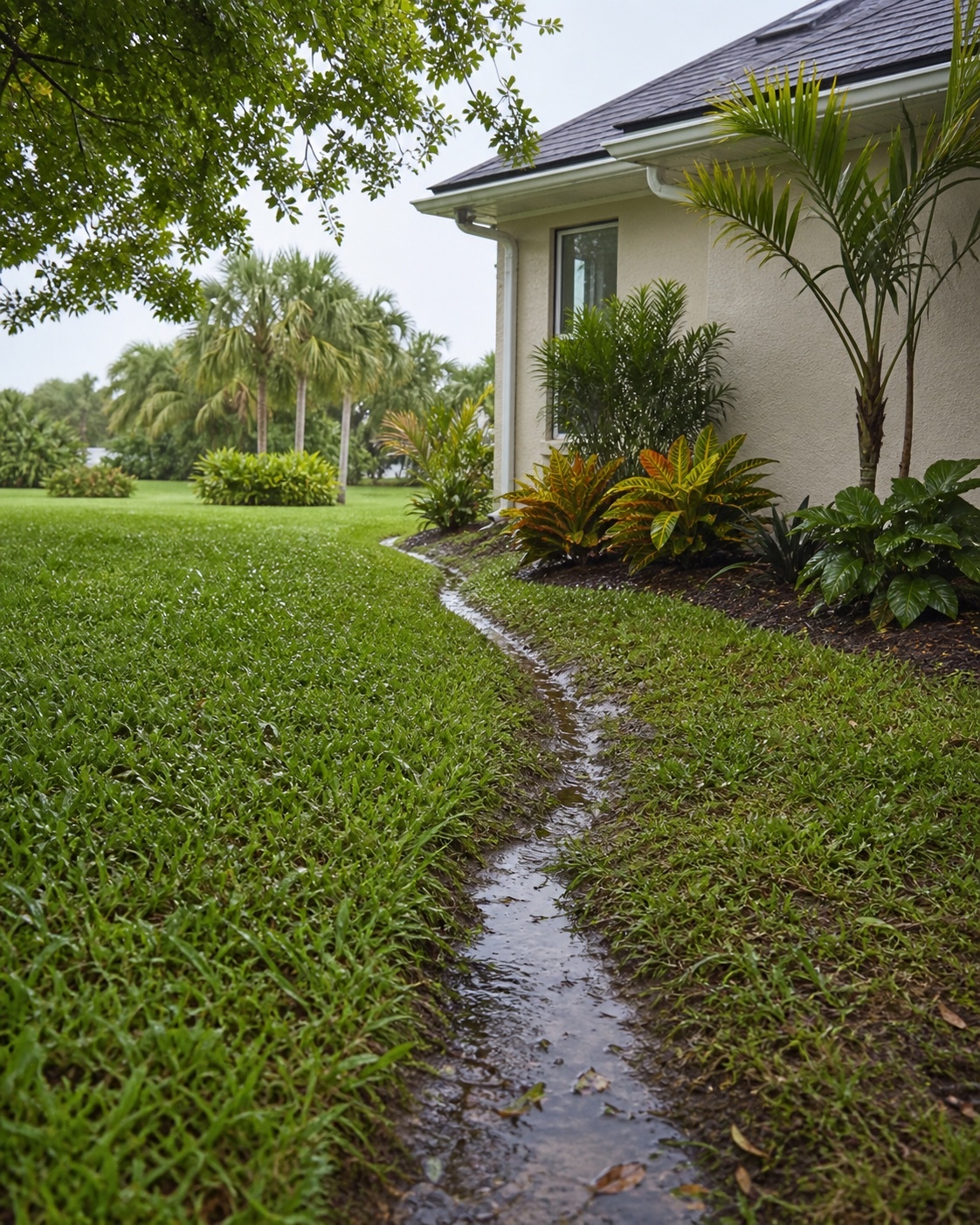
What a swale is supposed to do
A swale is a broad, shallow depression that slows, stores and carries stormwater. Unlike a concrete gutter, it may remain damp or hold water temporarily after prolonged rain. In Port St. Lucie, swales and canals are part of the municipal stormwater network, and driveway culverts help preserve that route between properties.
The important distinction is between temporary storage and a persistent failure. A low swale holding water during a major storm may be doing its job. A blocked culvert, eroded bank, filled right-of-way or flow moving toward a structure deserves a closer look.
Observe first, then change the site
- During rain: photograph flow from roof, driveway, pool deck and neighboring grades.
- After rain: record the deepest location and how many hours it remains.
- At the street: look for blocked grates, collapsed or sediment-filled culverts and standing water that spans multiple lots.
- At the house: note whether water approaches doors, slab edges, equipment or a pool enclosure.
- After recent work: identify new pavers, fill, fencing, pools, beds or sod that may have changed elevations.
Where private drainage work becomes sensitive
Work inside a public right-of-way, alteration of a roadside swale, connections to public systems and changes affecting neighbors can require city review or approval. Utilities may also cross the route that looks easiest on the surface. Before excavation, have underground facilities located through Sunshine 811 ↗ and verify current local requirements.
A private contractor should be able to explain the proposed water path from inlet to outlet. “We will put in a drain” is incomplete if the outlet elevation, discharge location and maintenance plan are unknown.
Flood risk is a separate question
Yard drainage can improve nuisance ponding but does not replace flood-zone research, insurance decisions or emergency planning. For property-specific flood information and mitigation resources, use the city’s Flood Mitigation & Insurance guidance ↗ and official FEMA resources.
A practical next step
If the issue is fully on private property, collect your rain photos, duration notes and recent-site-change history before speaking with a provider. If the problem appears to involve a public swale, culvert, canal or right-of-way, begin with the city so private work does not conflict with the larger system.