01
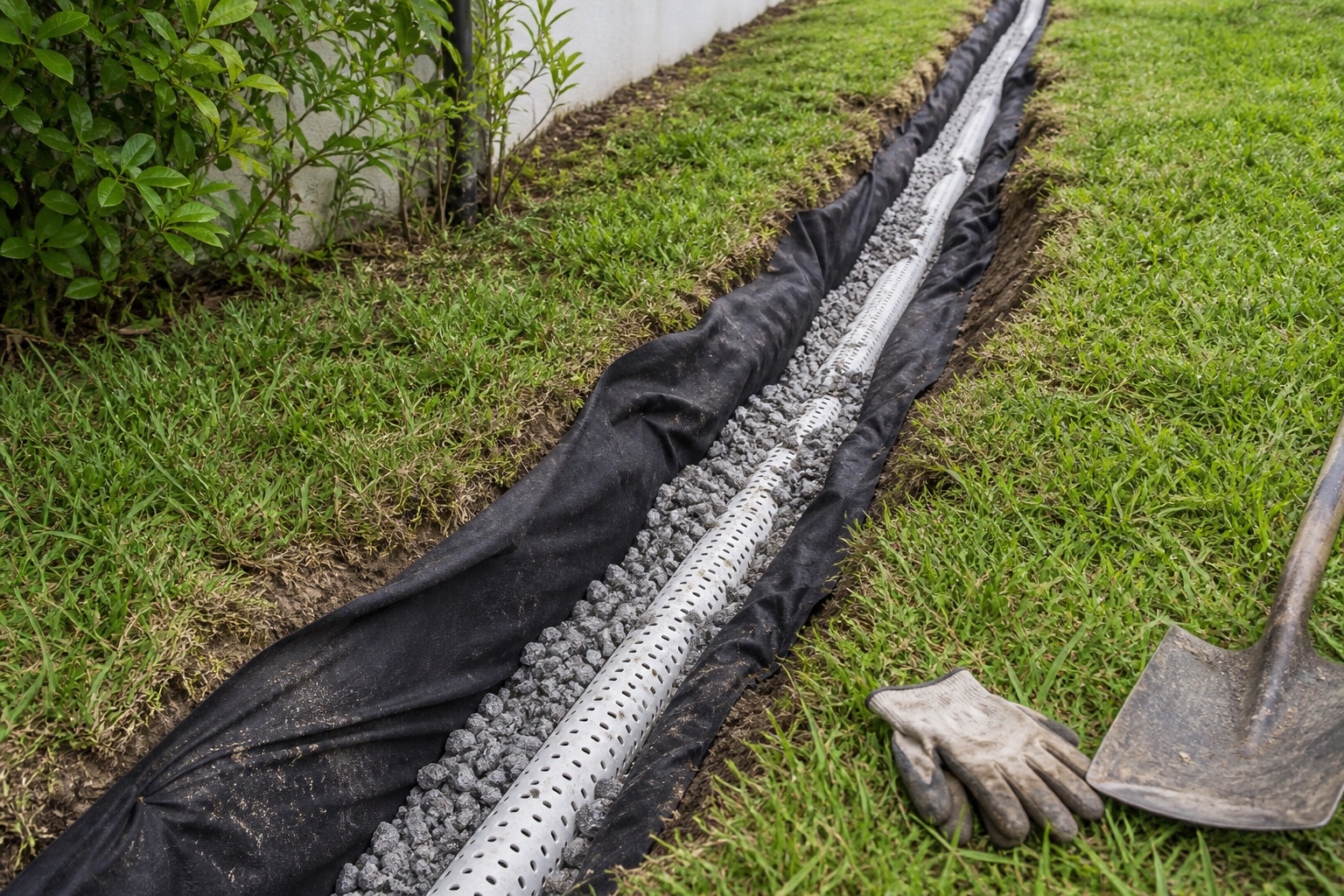
Subsurface water
French drains
Subsurface drainage for persistent soggy areas, low strips and water moving through the soil.
Explore this solution →Yard drainage help for Port St. Lucie homeowners
Standing water, soggy lawns and uncontrolled runoff deserve a solution built around your property—not a one-size-fits-all trench.
What can we help with?
Drainage services
The right system depends on elevation, soil, runoff volume, roof discharge and a safe outlet. Start with the water path before choosing the hardware.
Subsurface water
Subsurface drainage for persistent soggy areas, low strips and water moving through the soil.
Explore this solution →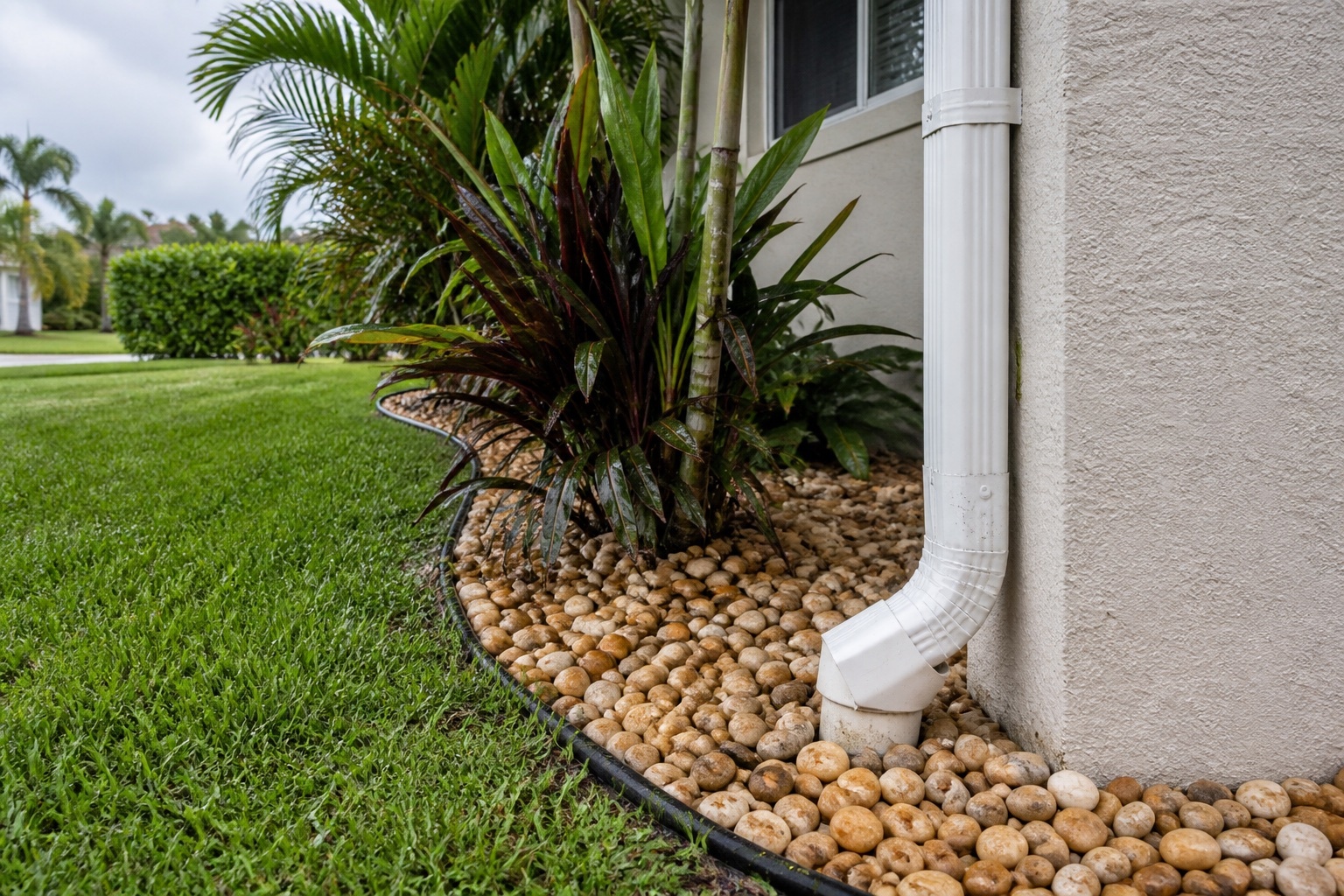
Roof runoff
Solid buried lines and controlled outlets that move concentrated roof runoff away from the house.
Explore this solution →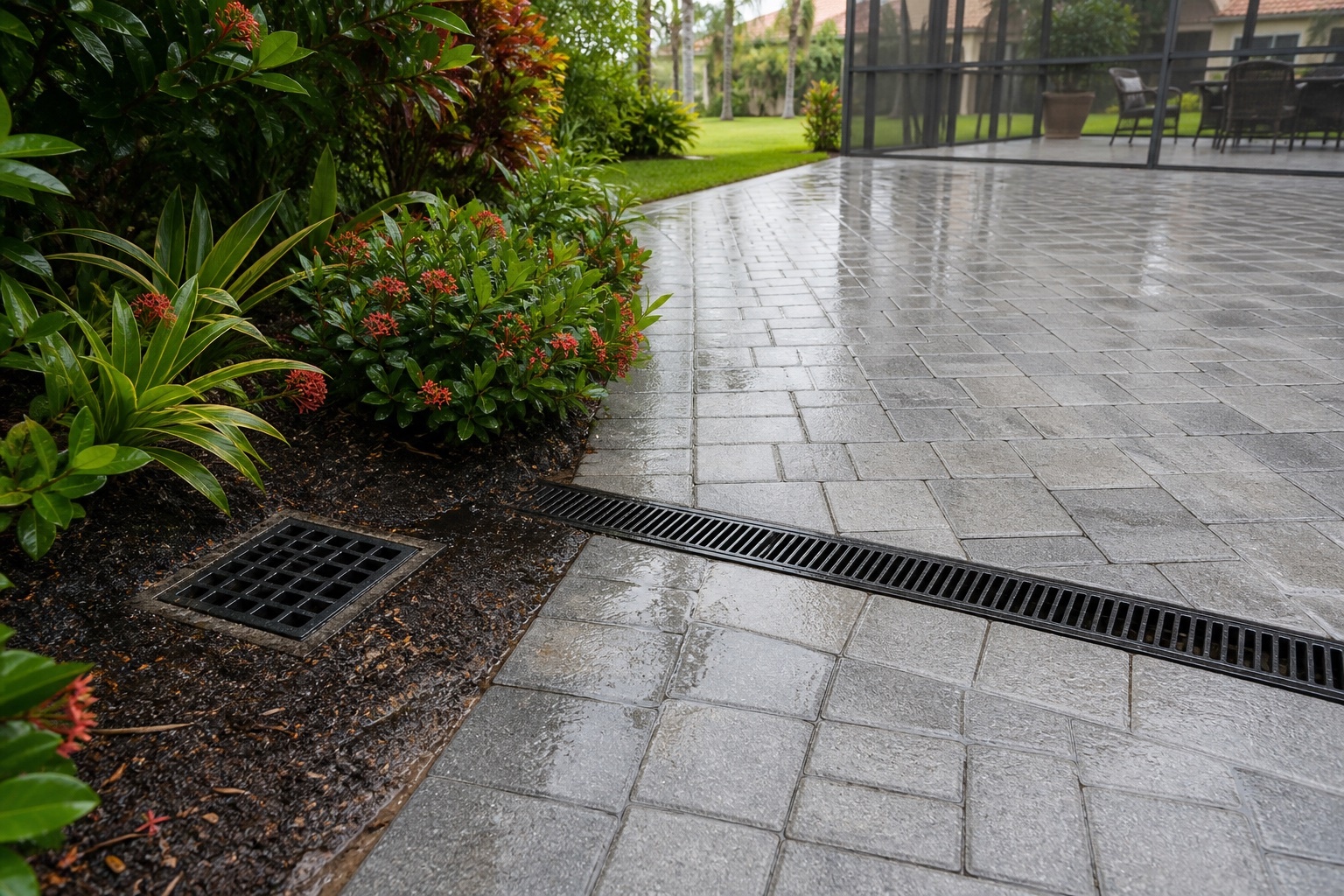
Surface water
Targeted collection for patios, pool decks, driveways and isolated low points with fast surface runoff.
Explore this solution →Local drainage knowledge
Port St. Lucie relies on swales and canals to move stormwater. Some standing water after prolonged rain can be expected; blocked flow, erosion, unauthorized alterations or water moving toward a structure are different problems.
Quick field notes
Photograph the water line.Images taken during rain show more than a dry-yard appointment.
Time how long it remains.A location, depth and duration are more useful than “it floods.”
Mark every source.Roof, pool deck, driveway and adjacent lots can combine into one low point.
A plain-English starting point
Swipe horizontally to compare all columns
| What you notice | Possible approach | What still needs inspection |
|---|---|---|
| Soggy strip or subsurface seepage | French drain or interceptor drain | Slope, soil, depth and legal outlet |
| One recurring low spot | Catch basin and solid outlet pipe | Inlet elevation and debris load |
| Water crossing a patio or driveway | Channel or trench drain | Runoff volume and load rating |
| Roof water collecting by the house | Downspout extension or buried line | Gutter capacity, outlet and erosion |
| Broad ponding across the yard | Grading plus a connected drainage plan | Whole-site elevations and neighboring flow |
Educational comparison only—not a site-specific design or estimate.
How referrals work
We collect useful project details first, then seek an available independent provider whose stated area and scope fit the request.
Tell us where water collects, when it appears, how long it remains and add photos when a provider contacts you.
The location and job type are checked before an available provider receives the request.
An independent contractor may contact you to discuss inspection, scope and next steps.
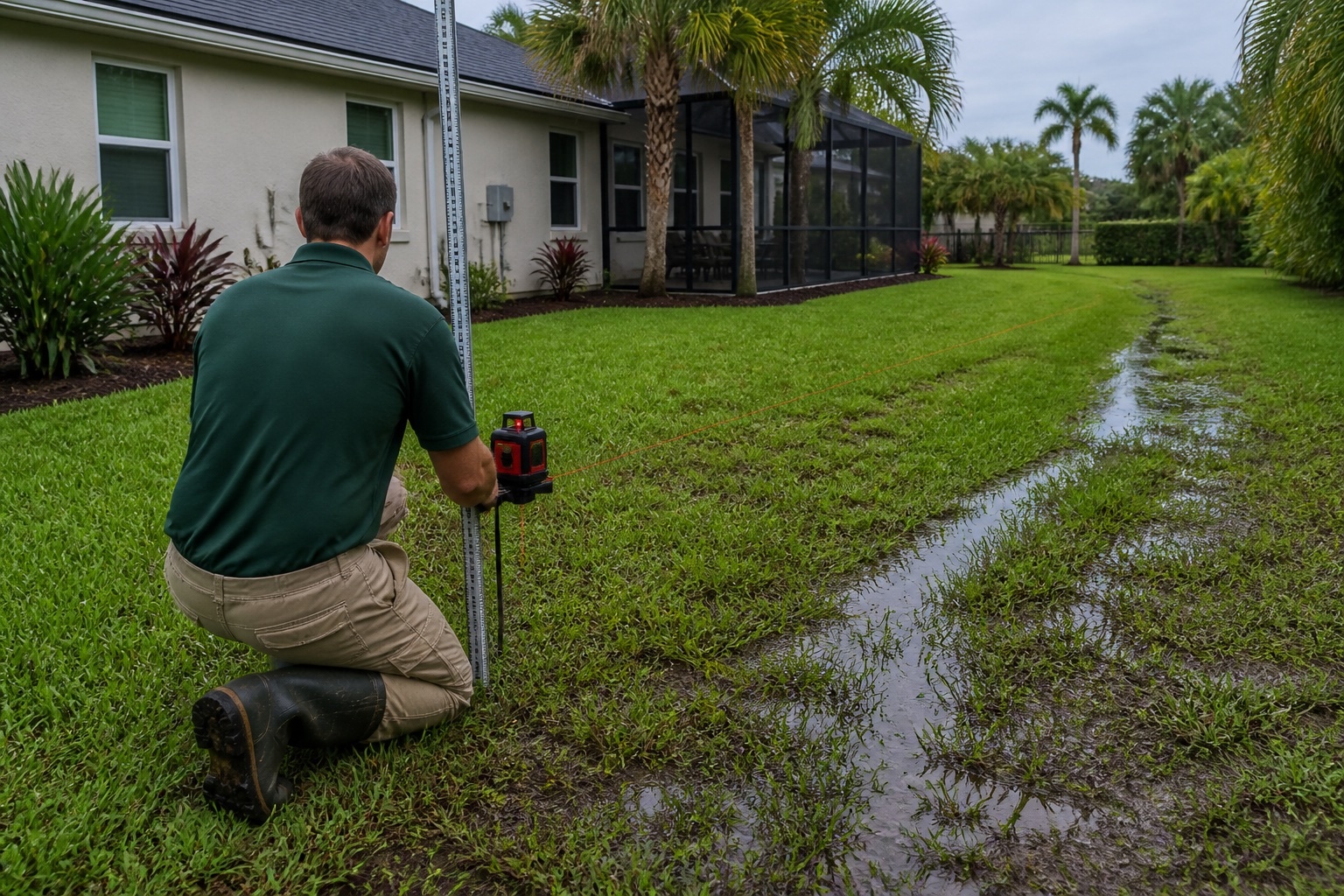
Prepare for a site visit
Frequently asked questions
Start with where the water appears, how long it remains after rain, and where it can legally and safely discharge. Surface pooling, subsurface water, roof runoff and grading problems can require different solutions. A contractor should inspect elevations and the complete water path before recommending work.
No. Port St. Lucie uses roadside swales as part of its stormwater system, and they can temporarily hold water after sustained rain. Persistent blockage, erosion, improper alterations or water threatening the home deserve closer review.
Do not alter a drainage right-of-way based on a generic website answer. City requirements, utilities, driveway culverts and neighboring flow all matter. Confirm current rules with Port St. Lucie before proposing work.
No. PortStLucieDrainage.com is an independent information and referral service. Requests may be shared with independent service providers. Those providers are responsible for their estimates, credentials, contracts, work and warranties.
Get started
Tell us what happens when it rains. When intake is active, your request can be routed to an available independent provider for a site-specific conversation.